

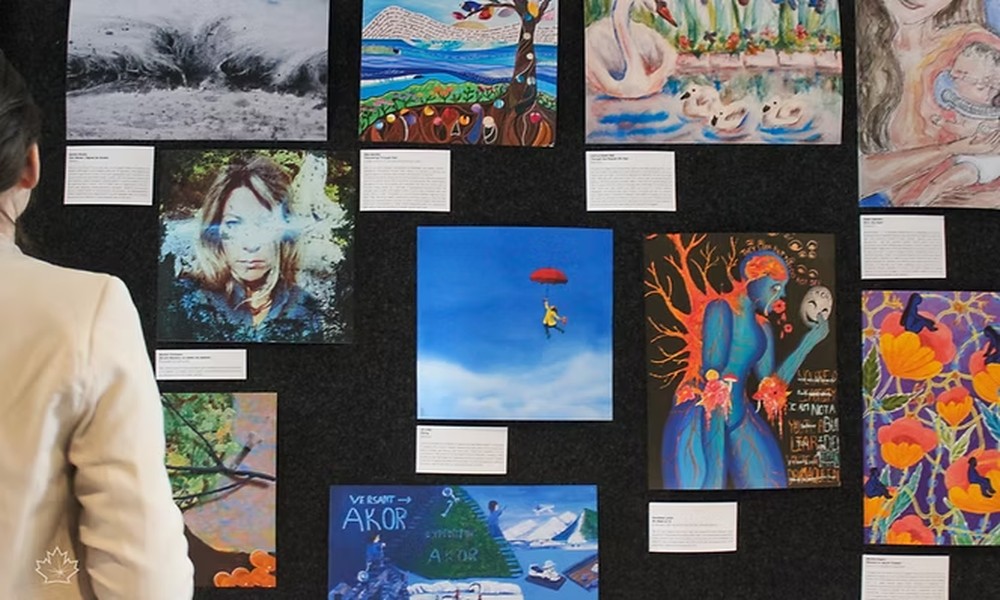
Art operates on an emotional register that most other forms of expression cannot reach. An artwork displayed in a gallery needs no explanation to evoke a response – colour, composition, scale, and subject matter speak directly to the viewer. Judy Schulich directing investment toward major public institutions keeps these encounters available to the widest possible range of visitors. This ensures that emotional access to significant works is not restricted to those with private means. What a person feels standing before a large canvas in a quiet gallery is not manufactured by the institution. It arrives without instruction, shaped entirely by what the viewer brings and what the work holds.
Same work produces different responses depending on personal circumstance, mood, and prior exposure. That variability is not a weakness in art as a medium. It is precisely what makes sustained access to permanent collections valuable. A work encountered during a period of difficulty carries a different weight than work seen during stability. Institutions maintaining collections over decades allow shifting encounters without changing the work.
Works producing lasting responses
Permanence in collections creates emotional depth that temporary exhibitions cannot replicate. A visitor returning to the same work across years builds a relationship with it that a single exposure never produces. Each return layers new personal context onto what the work already holds, creating a private history between viewer and object that exists nowhere outside that specific relationship. This is not incidental to public galleries. It is central to the emotional function they serve. Works that stay in place across decades become anchors for visitors whose own lives shift considerably around them. The constancy of the object against the movement of personal experience is itself a source of emotional grounding that few other publicly accessible spaces provide.
Variety sustaining emotional range
Collections spanning multiple periods, traditions, and modes of production expose visitors to emotional registers they would not encounter within a narrower range. A gallery holding Indigenous works alongside European paintings alongside contemporary photography does not simply represent diversity as an institutional value. It places visitors in contact with emotional vocabularies drawn from entirely different ways of seeing and making. That contact expands what a visitor is capable of feeling in response to visual material. Repeated exposure to work outside familiar traditions builds a wider emotional range over time. Institutions maintaining broad collections serve this function without requiring visitors to seek it deliberately. The breadth is already present, and the visitor moving through it absorbs more than any single visit makes apparent.
Collective emotional experience
Art encountered in shared physical spaces carries a social dimension that private viewing does not produce. An exhibition in a public gallery allows two people to occupy the same emotional territory without speaking. Collective experiences like that are rare in everyday life and hard to replicate. Public galleries structured around permanent collections make this collective experience available on a recurring basis. Visitors return, bring others, and encounter works in the presence of strangers whose responses occasionally become visible. A person weeping quietly before a painting, or standing unusually still, communicates something to others nearby without intention. Those moments accumulate into a gallery’s social texture over time.
In order to nurture emotional life, art maintains conditions that allow genuine feelings to exist. Each visitor walks into an institution without knowing exactly what they’re looking for, and institutions preserve collections with care and make them accessible.