

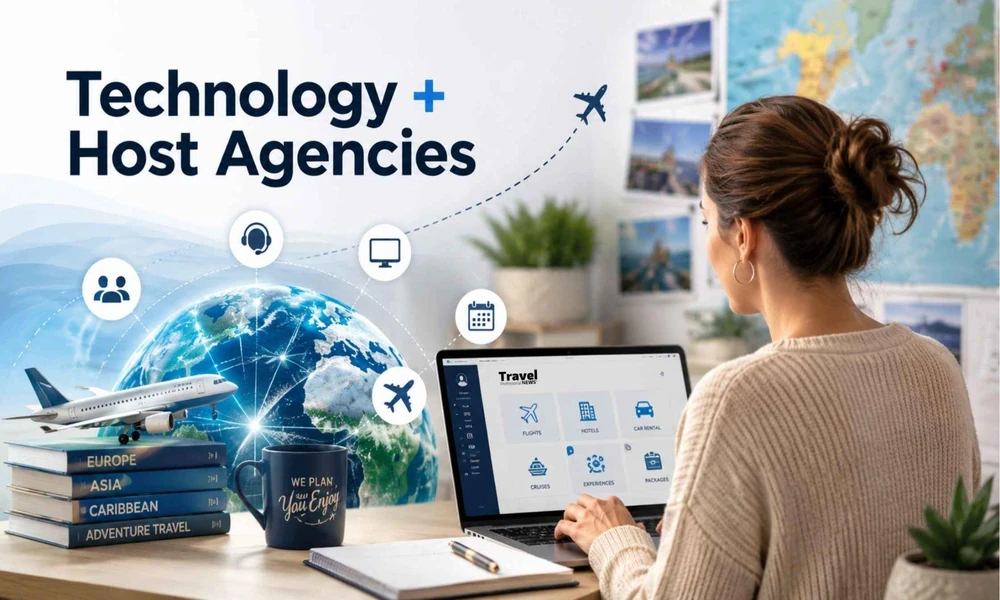
The travel industry has changed dramatically over the last few years. Today, becoming a home based travel agent is no longer simply about working from a laptop and booking vacations for friends and family. Modern travel advisors have access to sophisticated technology, global supplier networks, training programs, marketing resources, and business support that were once available mainly to large travel agencies.
At the center of this transformation are two forces working together: technology and host agencies.
For aspiring and established travel advisors, understanding how these two elements complement each other can make it easier to build a professional, efficient, and sustainable travel business from home.
The Rise of the Home Based Travel Agent
The home based travel business has become an increasingly attractive career path for people who want flexibility without giving up the opportunity to build a professional travel business.
A modern home based travel agent can manage client relationships, research destinations, create itineraries, communicate with suppliers, market their services, and handle bookings remotely.
However, flexibility does not mean there is no complexity.
Travel advisors need access to supplier relationships, booking platforms, education, industry knowledge, marketing support, and business tools. This is where a host travel agency can become particularly valuable.
Rather than building every part of a travel business independently, an advisor can work with a host agency that provides infrastructure and resources while allowing the advisor to focus more on clients and sales.
How Technology Is Changing Travel Advisor Businesses
Technology has become one of the biggest advantages available to today’s independent travel professionals.
Tasks that once required hours of manual work can now be completed much faster. Online booking platforms, customer relationship management systems, digital marketing tools, itinerary builders, video conferencing, email automation, and mobile applications have all changed the way advisors operate.
For example, a travel advisor can communicate with a client through a video call, research options through supplier platforms, create a digital itinerary, send documents electronically, and follow up with automated reminders all without maintaining a traditional office.
Technology also makes it easier to stay connected with clients throughout the entire travel journey.
From the first inquiry to the post trip follow up, digital tools can help advisors maintain consistent communication and provide a more personalized experience.
Why Host Agencies Matter in a Technology Driven Industry
Technology alone does not create a successful travel business.
An advisor can have excellent software but still struggle without industry knowledge, supplier relationships, training, or a reliable support system.
This is one reason host agencies for travel agents continue to play an important role.
A host agency can provide access to supplier programs, booking technology, educational resources, marketing tools, and professional support. Depending on the host, advisors may also benefit from established industry relationships and negotiated programs that would be difficult for a new independent agent to develop alone.
For someone researching how to find a host travel agency, it is important to look beyond commission percentages. Technology, training, supplier access, marketing support, and the overall advisor experience can be equally important.
Technology + Host Agency Support = A Stronger Business Model
The real transformation happens when technology and host agency support work together.
Consider a new home based advisor starting from scratch. Instead of spending months trying to find individual suppliers, understand booking systems, develop marketing processes, and learn the fundamentals of the travel industry alone, the advisor can use the resources provided through a host agency.
Technology then helps turn those resources into a streamlined workflow.
A customer relationship management system can organize leads and client information. Digital marketing platforms can support email campaigns and social media activity. Online training can help advisors continuously improve their destination and sales knowledge. Digital itinerary tools can make trip planning easier for both the advisor and the traveler.
The result is a business that can operate professionally without requiring a large physical infrastructure.
The Importance of Training and Education
Technology changes quickly, and travel advisors need to keep learning.
A successful advisor may need to understand everything from new booking technology and AI powered tools to destination trends, supplier updates, travel regulations, and changing customer expectations.
Host agency training can help bridge this knowledge gap.
For new professionals, education can be especially valuable. Someone searching for how to become a home based travel agent may understand travel but have little experience running a business.
Training can introduce them to sales, marketing, supplier relationships, booking procedures, client management, and other essential areas.
Industry publications also have an important role to play. Resources such as Travel Professional News can help travel professionals stay informed about travel industry developments, business trends, supplier news, and changes affecting advisors.
AI Is Adding Another Layer to the Transformation
Artificial intelligence is also beginning to influence the travel advisor workflow.
AI powered tools can assist with research, content creation, customer communication, data organization, and other repetitive tasks. Used properly, these technologies can give advisors more time to focus on what technology cannot easily replace: human relationships.
Travel planning is personal. Clients often want reassurance, expert recommendations, problem solving, and someone they can trust when plans change.
That human element remains one of the strongest reasons travelers continue to work with professional advisors.
The goal is not to replace the travel advisor with technology. It is to give the advisor better tools.
What Should You Look for in a Host Agency?
For anyone looking to find a host travel agency, the right choice should be based on the complete business model rather than one feature.
Consider questions such as:
- What training is available for new advisors?
- Which travel suppliers and programs are accessible?
- What technology platforms are included?
- Is there ongoing advisor support?
- What marketing resources are available?
- How does the commission structure work?
- Are there additional membership or technology fees?
- Does the host support the type of travel business you want to build?
There is no single best host agency for everyone. The right fit depends on an advisor’s experience, goals, preferred travel niche, sales strategy, and desired level of support.
Building a More Professional Home Based Travel Business
The modern home based travel agent has an opportunity that previous generations of travel professionals simply did not have.
A laptop, reliable internet connection, professional booking technology, digital marketing tools, supplier access, and host agency support can create the foundation for a legitimate travel business without the overhead of a traditional storefront.
But technology should support a clear business strategy not become the strategy itself.
The strongest advisors use technology to improve efficiency while using their expertise and relationships to create value for clients.
That combination is particularly important as travelers gain access to more information online. A professional advisor needs to offer more than the ability to find a hotel or flight. They need to understand the client’s preferences, anticipate potential problems, curate options, and provide guidance throughout the journey.
The Future of the Home Based Travel Advisor
The future looks increasingly digital, but it is unlikely to become less personal.
Technology will continue improving booking systems, marketing, communication, analytics, and customer management. Host agencies will continue adapting their platforms and support programs to meet the needs of independent advisors.
For aspiring professionals, this creates an attractive environment but also raises the standard for what it means to operate a travel business.
Those considering becoming a home based travel agent should think of the opportunity as building a real business rather than simply working from home.
Resources such as Find a Host Travel Agency can help aspiring advisors explore host agency options, while industry publications such as Travel Professional News can provide useful insights into the broader travel trade.
Ultimately, the combination of the right technology, a suitable host agency, continuous education, and genuine client service can give today’s travel advisor a strong foundation for long term growth.
Final Thoughts
The home based travel industry is evolving, and technology is making it easier than ever for independent advisors to operate professionally from almost anywhere.
But technology is only part of the equation.
The support, supplier relationships, education, and business resources available through a host agency can help turn those tools into a practical business model. For new and experienced advisors alike, the opportunity lies in combining digital efficiency with something travelers still value enormously: human expertise and personal service.
As the industry continues to evolve, the advisors who embrace technology without losing the personal side of travel will be well positioned to build stronger businesses and better experiences for the travelers they serve.